
CSOT Publishing presents a growing catalog of vocal and instrumental music for performers, teachers, and ensembles. The collection currently features works by Courtney Carey, including spiritual arrangements, art songs, song cycles, and chamber music written for a range of voices and instruments. Each score is created to support thoughtful interpretation, technical development, and meaningful performance in concerts, recitals, worship, and educational settings.
As the publishing division expands, CSOT plans to introduce works by additional composers and broaden the catalog across genres, voices, and instrumental combinations.

Six Spirituals for solo voice and piano
Arranged by Courtney Carey
High Voice
Vocal Collection
Courtney Carey pushes both the singer and the pianist to the extent of their musical and interpretive abilities with this stunning collection of spirituals. These arrangements, for advanced performers, are for use during the liturgical year, as well as concerts and recitals. Collection includes:
* I Wanna Be Ready
* Oh, De Blin’ Man Stood on the Road an’ Cried
* Sometimes I Feel Like a Motherless Chile
* Didn’t My Lord Deliver Daniel?
* Soon I Will Be Done
* In Bright Mansions Above

Six Spirituals for solo voice and piano
Arranged by Courtney Carey
Medium High Voice
Vocal Collection
Courtney Carey pushes both the singer and the pianist to the extent of their musical and interpretive abilities with this stunning collection of spirituals. These arrangements, for advanced performers, are for use during the liturgical year, as well as concerts and recitals. Collection includes:
* I Wanna Be Ready
* Oh, De Blin’ Man Stood on the Road an’ Cried
* Sometimes I Feel Like a Motherless Chile
* Didn’t My Lord Deliver Daniel?
* Soon I Will Be Done
* In Bright Mansions Above

Six Spirituals for solo voice and piano
Arranged by Courtney Carey
Low Voice
Vocal Collection
Courtney Carey pushes both the singer and the pianist to the extent of their musical and interpretive abilities with this stunning collection of spirituals. These arrangements, for advanced performers, are for use during the liturgical year, as well as concerts and recitals. Collection includes:
* I Wanna Be Ready
* Oh, De Blin’ Man Stood on the Road an’ Cried
* Sometimes I Feel Like a Motherless Chile
* Didn’t My Lord Deliver Daniel?
* Soon I Will Be Done
* In Bright Mansions Above
Piano/Vocal Score
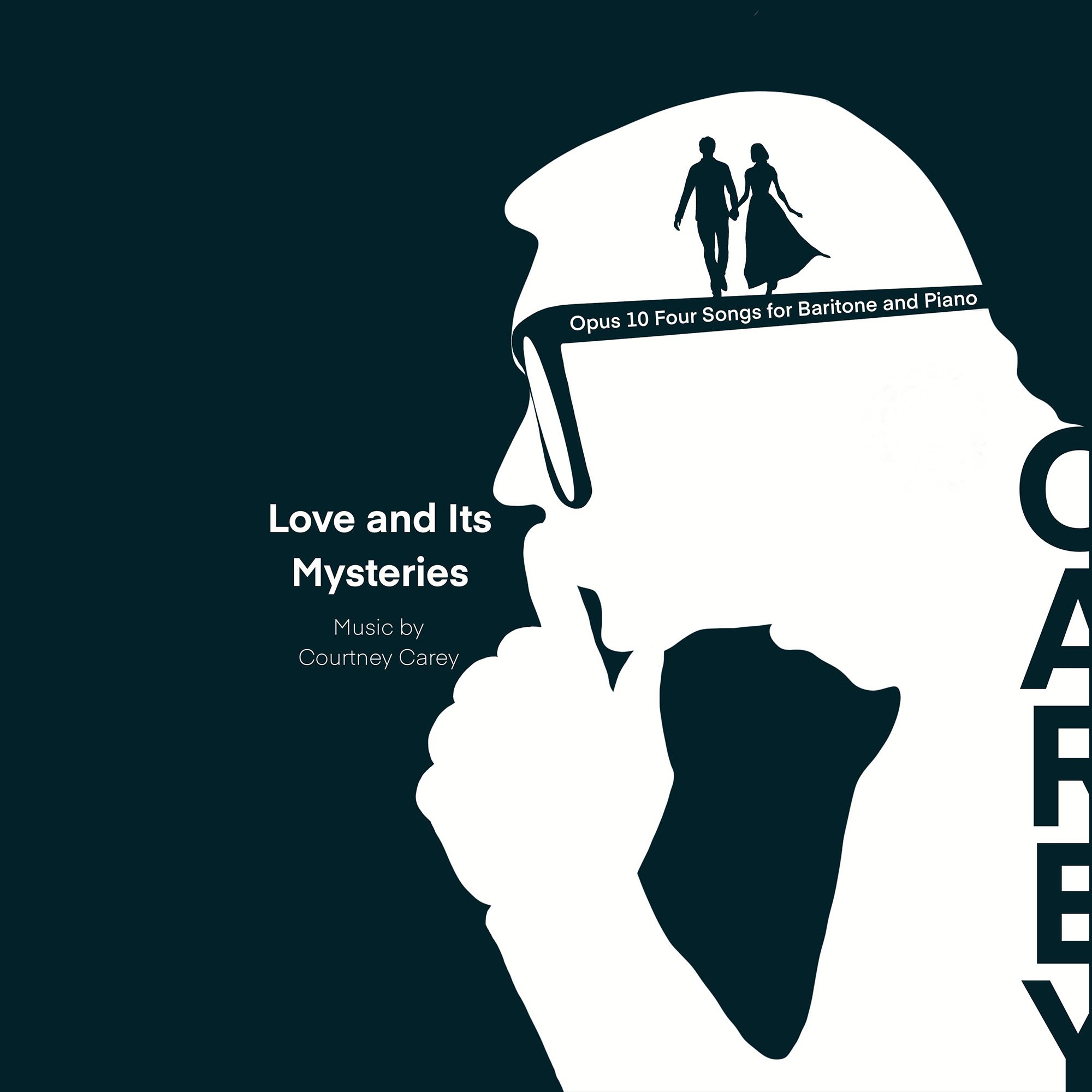
Courtney Carey’s Love and Its Mysteries, Op. 10, is a four-song cycle setting poems by e. e. cummings. Moving between tenderness, wit, desire, and wonder, the work reflects the poet’s unconventional language through lyrical vocal writing, vivid harmonic color, and a richly expressive piano part.
The piano functions as an equal dramatic partner, shaping the emotional character of each song through passages of intimacy, rhythmic vitality, tension, and release. Written for accomplished performers, the cycle requires musical sensitivity, interpretive imagination, and close collaboration between singer and pianist.
The collection includes:
my love is building a building around you
o distinct lady of my unkempt adoration
yes is a pleasant country
somewhere i have never travelled
Piano/Vocal Score
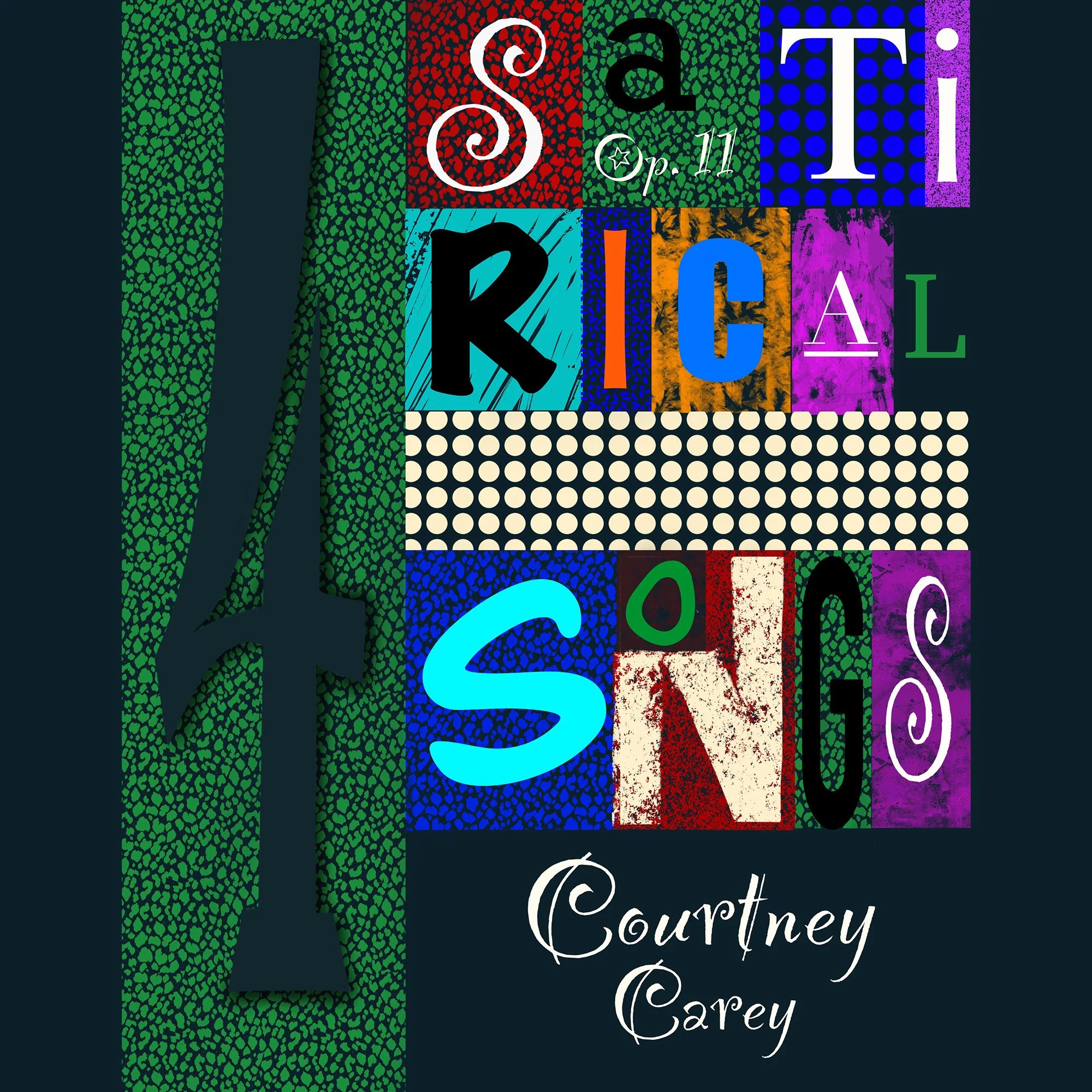
Courtney Carey’s Four Satirical Songs sets four poems by Thomas Hardy in a sharply drawn cycle for voice and piano. Wry, theatrical, and darkly humorous, the songs explore courtship, social convention, romantic disappointment, and marriage through Hardy’s characteristically unsentimental perspective.
Carey’s settings respond to the poetry with vivid contrasts of mood, pointed rhythms, lyrical passages, and expressive harmonic shifts. The piano serves as an active dramatic partner, illuminating the irony beneath the words and helping define the distinct personality of each scene. Written for accomplished performers, the cycle calls for rhythmic precision, interpretive flexibility, clear diction, and a keen sense of comic timing.
The collection includes:
At Tea
By Her Aunt’s Grave
At the Altar-Rail
In the Nuptial Chamber
Score and Parts
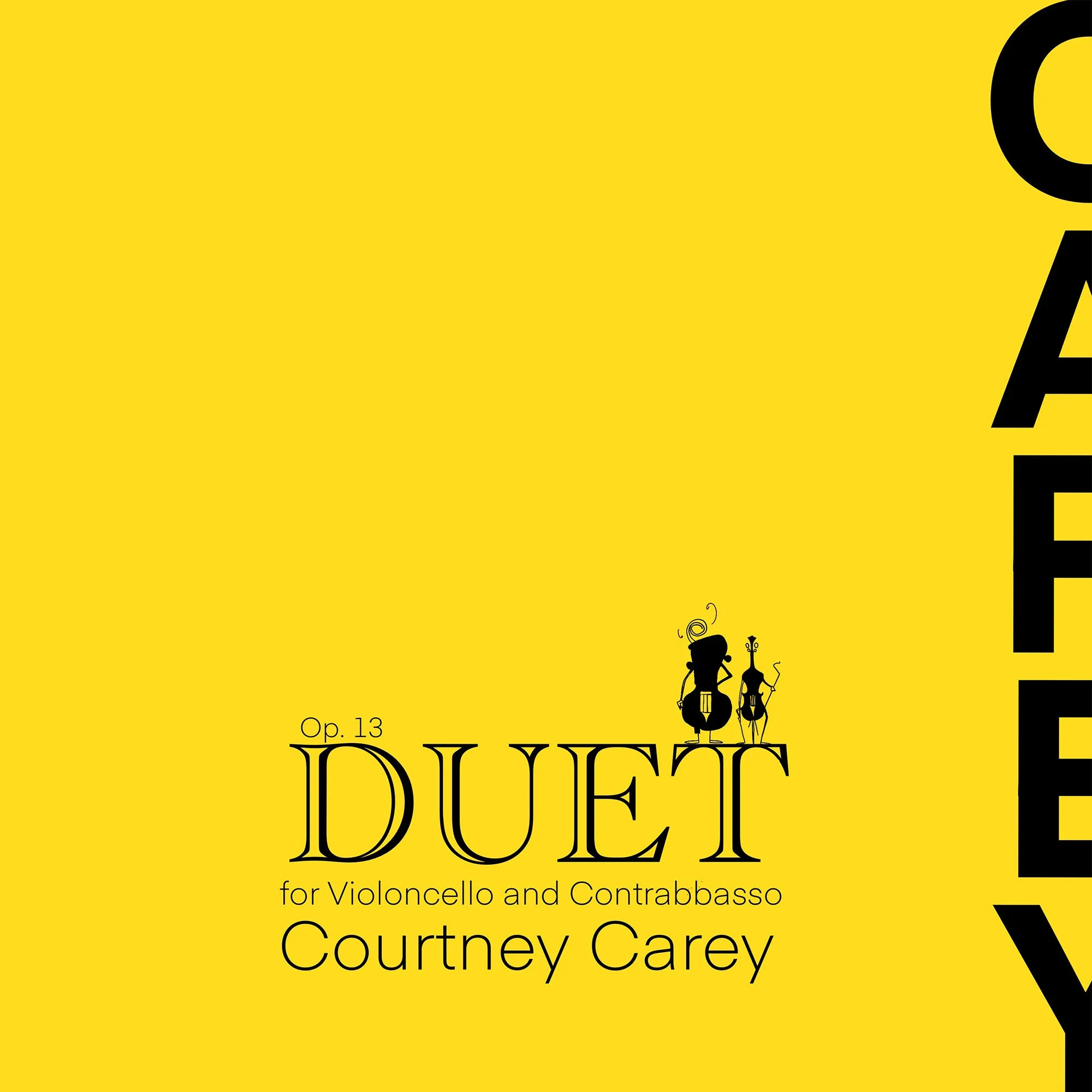
Composed for cellist Diana Golden and bassist Anthony Morris, Courtney Carey’s Duet for Violoncello and Contrabbasso, Op. 13, transforms the confrontation scene from Act III of Oscar Wilde’s The Duchess of Padua into an intense dramatic exchange between two low-string instruments.
The cello and double bass emerge as distinct, equally matched characters, moving through passages of agitation, argument, pursuit, and uneasy reflection. Rapid gestures, sharp rhythmic exchanges, and striking contrasts of register create a sense of theatrical urgency, while more sustained passages expose the tension beneath the conflict. Rather than serving conventional supporting roles, both instruments carry the musical and dramatic action.
Written for advanced performers, the duet demands technical command, rhythmic precision, expressive range, and close ensemble coordination. The result is a compelling chamber work that brings operatic drama to the concert stage without words.
Piano/Vocal Score 7.5 × 10 in.
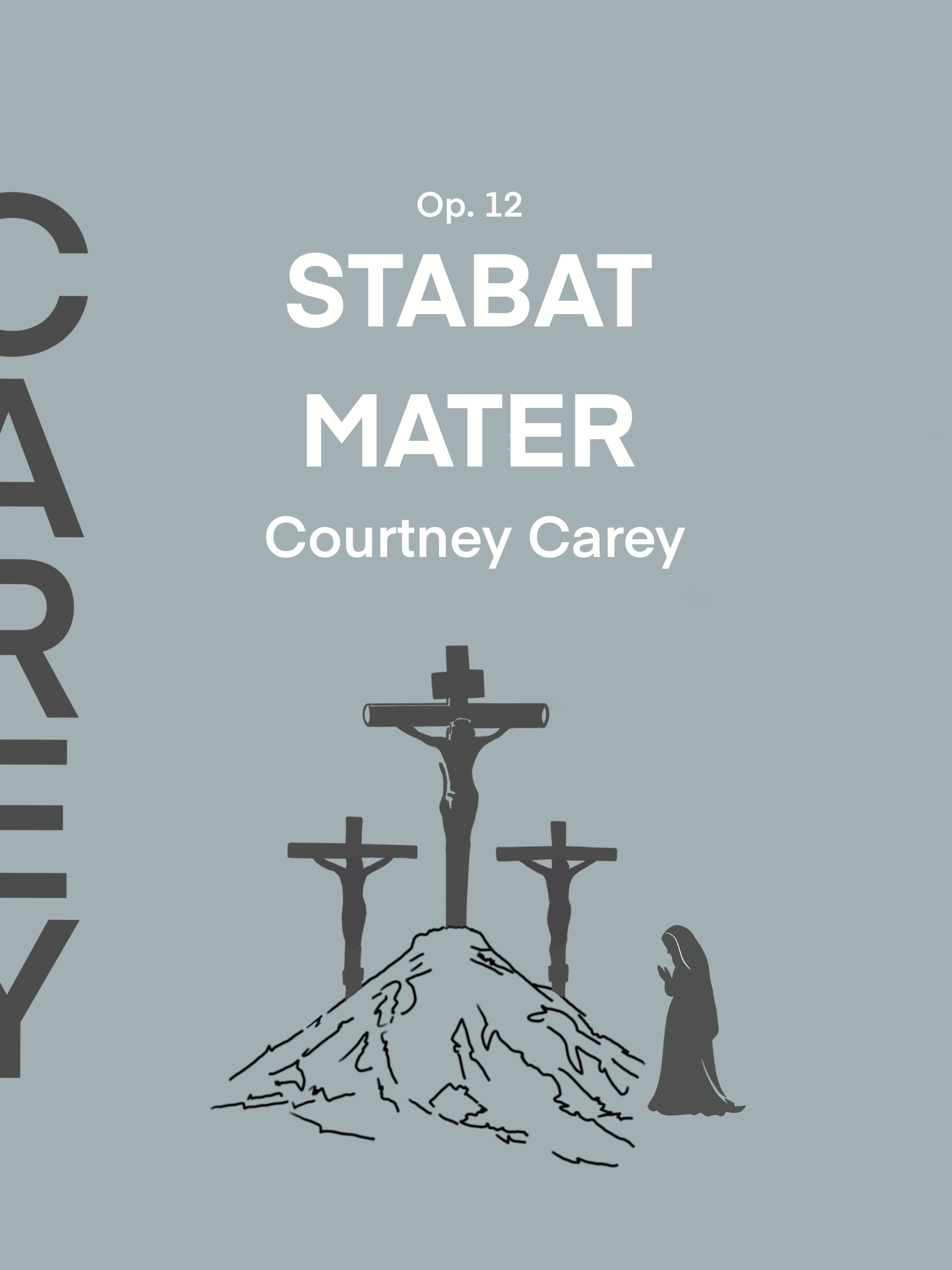
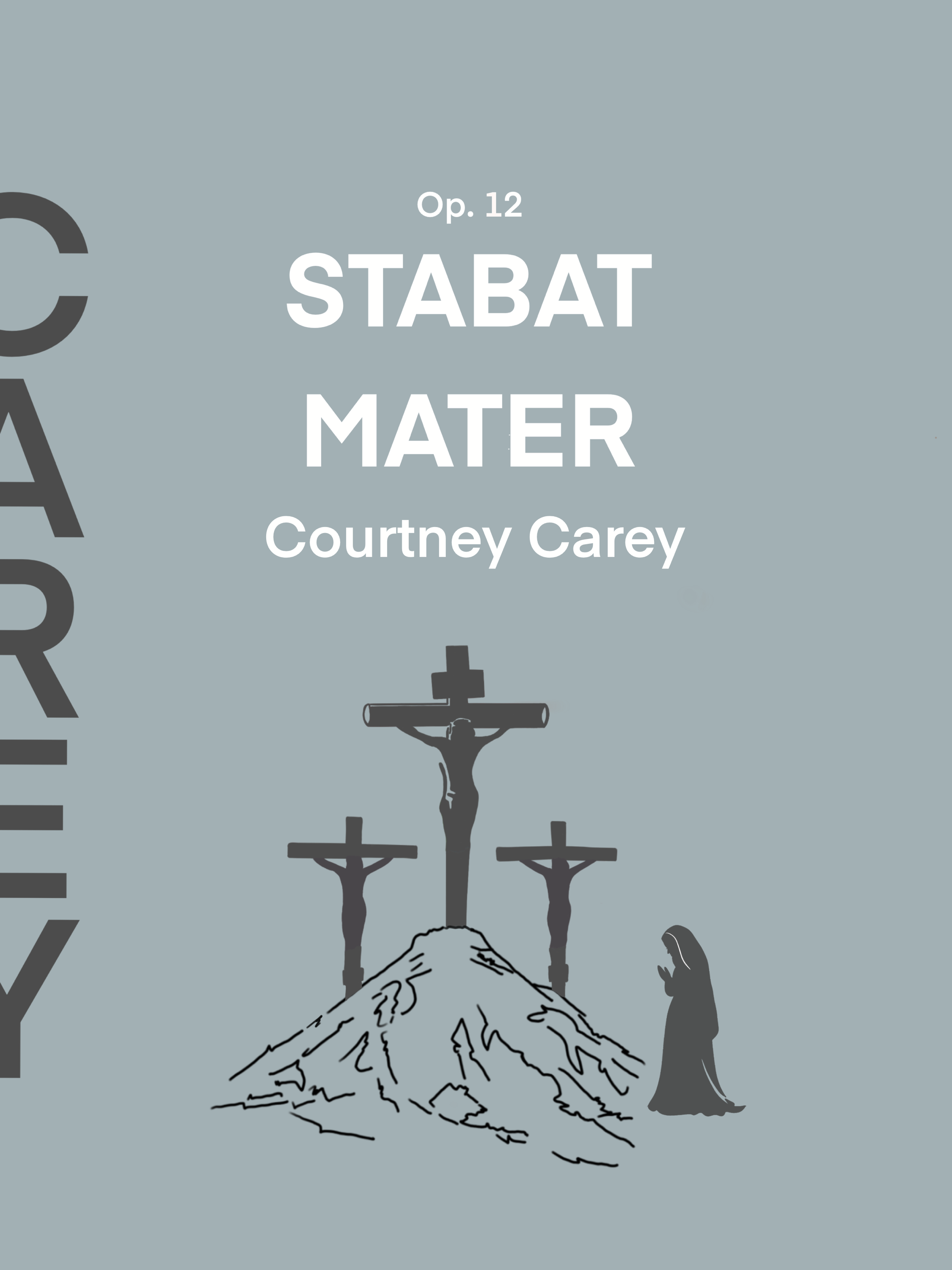
Courtney Carey’s Stabat Mater, Op. 12, is a seven-movement sacred work for alto, tenor, bass, and chamber orchestra. Inspired by the medieval Latin hymn and shaped by a Baroque-influenced musical language, the work moves through grief, compassion, spiritual anguish, and hope with ornate vocal writing, vivid harmonic contrasts, and expressive instrumental color.
The three soloists are conceived as the figures at Calvary: the alto represents Christ in physical form while giving voice to Mary’s lament, and the tenor and bass represent the two thieves crucified beside him. The outer movements bring all three voices together, while the five central movements unfold as individual reflections. Written for accomplished performers, the work requires vocal agility, dramatic sensitivity, rhythmic precision, and close attention to Carey’s distinctive use of consonance and dissonance.
The collection includes:
Stabat Mater
O Quam Tristis et Afflicta
Pro Peccatis Suae Gentis
Eia Mater Fons Amoris
Tui Nati Vulnerati
Inflammatus et Accensus
Quando Corpus Morietur/Amen
Orchestra Parts
Courtney Carey’s Stabat Mater, Op. 12, is a seven-movement sacred work for alto, tenor, bass, and chamber orchestra. Inspired by the medieval Latin hymn and shaped by a Baroque-influenced musical language, the work moves through grief, compassion, spiritual anguish, and hope with ornate vocal writing, vivid harmonic contrasts, and expressive instrumental color.
The three soloists are conceived as the figures at Calvary: the alto represents Christ in physical form while giving voice to Mary’s lament, and the tenor and bass represent the two thieves crucified beside him. The outer movements bring all three voices together, while the five central movements unfold as individual reflections. Written for accomplished performers, the work requires vocal agility, dramatic sensitivity, rhythmic precision, and close attention to Carey’s distinctive use of consonance and dissonance.
Set of parts for:
Violin I
Violin II
Viola
Cello/Basso Continuo
Oboe
Bassoon
Trumpet
Full Score
Courtney Carey’s Stabat Mater, Op. 12, is a seven-movement sacred work for alto, tenor, bass, and chamber orchestra. Inspired by the medieval Latin hymn and shaped by a Baroque-influenced musical language, the work moves through grief, compassion, spiritual anguish, and hope with ornate vocal writing, vivid harmonic contrasts, and expressive instrumental color.
The three soloists are conceived as the figures at Calvary: the alto represents Christ in physical form while giving voice to Mary’s lament, and the tenor and bass represent the two thieves crucified beside him. The outer movements bring all three voices together, while the five central movements unfold as individual reflections. Written for accomplished performers, the work requires vocal agility, dramatic sensitivity, rhythmic precision, and close attention to Carey’s distinctive use of consonance and dissonance.
The collection includes:
Stabat Mater
O Quam Tristis et Afflicta
Pro Peccatis Suae Gentis
Eia Mater Fons Amoris
Tui Nati Vulnerati
Inflammatus et Accensus
Quando Corpus Morietur/Amen
Score and Part
Courtney Carey’s arrangement of O Rocks, Don’t Fall on Me brings renewed dramatic force to this complex and often-overlooked African American spiritual. Its coded language and layered imagery are shaped through an original melody, vivid harmonic writing, and propulsive rhythms that heighten the work’s sense of urgency and emotional depth.
Written for voice and piano, with optional cello, the arrangement demands strong interpretive insight, rhythmic precision, and close ensemble collaboration. The cello adds warmth and gravity to the texture, enriching the dialogue between voice and piano and helping create a powerful concert work with striking theatrical impact.